

Automation rarely starts with a full factory transformation.
More often, it begins with a single line. One challenge, one opportunity, one team ready to try something different.
What matters is what happens next.
 Photo by Amit Lahav on Unsplash
Tackle a real constraint, not the whole plant
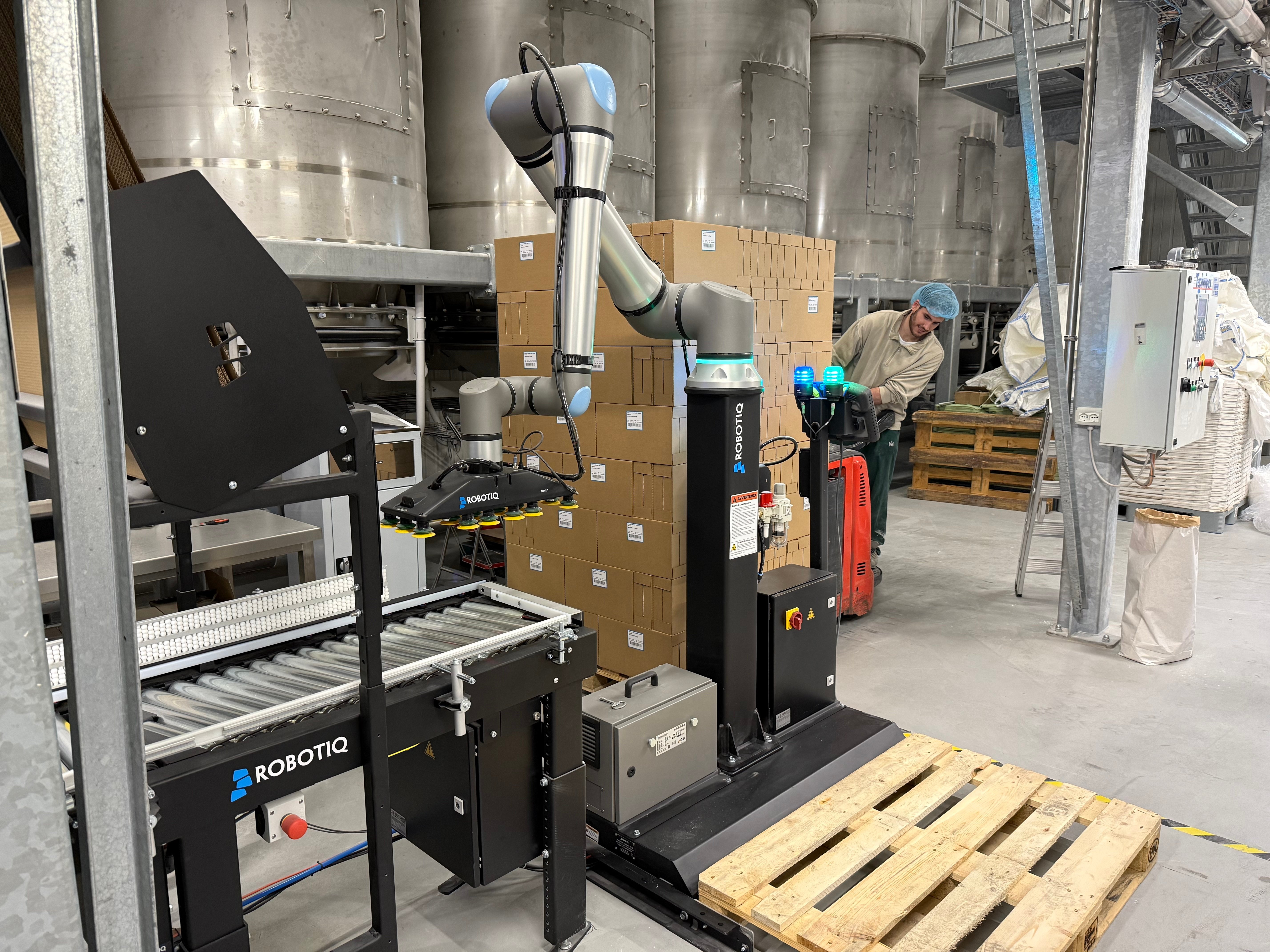
At a major confectionery site in Germany, end-of-line palletizing had become a recurring bottleneck: inconsistent pallets, heavy manual handling and throughput pressure during seasonal peaks. Rather than automating the whole factory, the team asked a practical question: where can we create immediate, repeatable impact? The answer was a single, reusable palletizing cell.
Design the pilot for reuse and for people
The pilot focused on three practical goals: stabilize end-of-line operations, raise pallet consistency and reduce manual strain for operators. Key design choices made the cell replicable across lines:
- Configurable pallet patterns for common box formats
- Handling standard Euro pallets (800 × 1,200 mm) and pallet heights up to ~2.4 m
- Reliable pick performance in the 6–10 picks/min range and an intuitive operator HMI
Because the cell was built as a template rather than a bespoke one-off, it was straightforward to adapt to other lines.
From pilot to program -- fast
The pilot produced measurable gains in consistency, ergonomics and throughput stability. Those results changed the conversation: automation shifted from a theoretical improvement to an operational capability.
Within roughly a year of the first deployment the site had deployed lines 1 and 2 and was preparing to roll out lines 3 and 4 — a clear signal the pilot had become a repeatable model. Reused tooling, pallet patterns and commissioning checklists shortened design and commissioning times for follow-on cells, so benefits arrived sooner across the site.
Why the ROI worked
Their ROI wasn’t a single headline figure — it came from several reliable, repeatable improvements:
- Labor & ergonomics. Stations that needed two operators moved to one for routine operation, delivering predictable recurring savings and lower ergonomic risk.
- Throughput stability. Repeatable pallet patterns and predictable pick rates removed hidden capacity losses and let the upstream line run at designed speeds.
- Fewer rework events. More consistent pallets reduced rebuilds, manual interventions and unplanned downtime.
- Faster future rollouts. Standardized templates reduced engineering and commissioning effort, accelerating the realization of plant-wide benefits.
Two early projects reached payback in under 12 months; a third was scoped with an expected 1–2 year payback — outcomes driven by operational improvements rather than a single dramatic saving.
What to measure for a defensible ROI
Capture these before/after inputs to build a clear ROI case:
- Net FTE change and hours saved per week per station
- Throughput uplift or reduced variability (cases/hr, fewer stops)
- Rework & scrap reductions (pallet rebuilds per week)
- Downtime & maintenance impacts (manual interventions, changeover time)
- Weeks saved on subsequent installs due to standardization
Translate those into annualized savings and compare them to your expected annual benefit to estimate payback in months.
Quick checklist for a reusable palletizing pilot
- Choose modular tooling that covers your box formats and pallet heights.
- Build a small, selectable library of pallet patterns accessible from the HMI.
- Keep changeovers short and document SOPs.
- Stock common spares locally and provide a one-page troubleshooting guide.
- Involve operators and maintenance in commissioning so the system isn’t “worked around.”
Results at a glance
- Site: world-renowned candy manufacturer (Germany)
- Project set: 3 projects for one site (2 closed, 1 in project-identification)
- Rollout pace: Lines 1 & 2 deployed; lines 3 & 4 preparing for deployment within ~1 year of the pilot
- Payback: 2 projects under 1 year; 1 project 1–2 years
- Pick rate: 6–10 picks/min
- Pallet format: 800 × 1,200 mm; heights up to ~2.4 m
- Packaging: cardboard boxes
- Approach: configurable palletizer + standardized tooling and templates
Related case studies
For more examples of the same repeatable approach in other food & beverage settings, see: a bread palletizing success story, Hack AG and a vodka palletizing implementation. These show how a reusable approach and simple templates speed deployments in different product categories.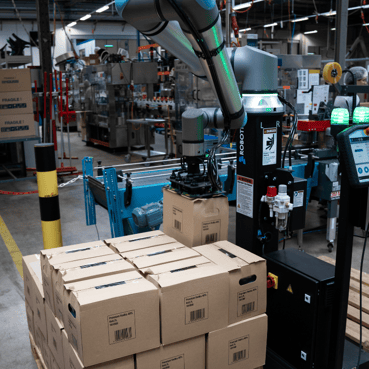
Top 5 key takeaways
- Start small, design for reuse. A focused pilot that is modular and templateable creates the fastest path to scaling.
- Measure the right things. Labor (FTEs), throughput variability, rework, downtime and deployment efficiency drive a defensible ROI.
- Make operators part of the solution. Simple HMIs, short training and maintenance involvement prevent the system from being “worked around.”
- Standardize to accelerate rollout. Reusable tooling, pallet patterns and commissioning checklists dramatically shorten design and commissioning for follow-on cells.
- ROI is the sum of many parts. Payback often comes from multiple modest, repeatable improvements (ergonomics, throughput stability, fewer rebuilds and faster deployments) rather than a single headline saving.
Bottom line: palletizing ROI in high-volume confectionery is the cumulative effect of reduced labor, improved throughput stability, less rework and the ability to replicate a flexible pilot quickly. Start with a well-scoped cell, measure the right KPIs, and use those wins to build a repeatable rollout plan.
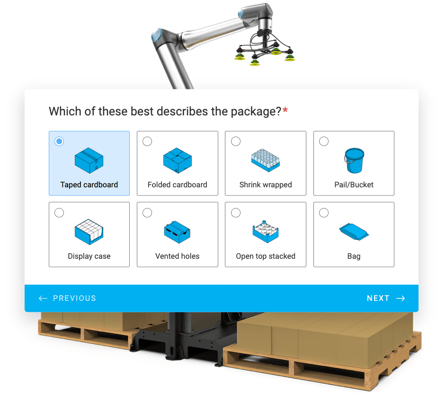
👉 Try the Palletizing Fit Tool to get a quick, personalized read on your palletizing potential and the inputs you need to model ROI.




Leave a comment