

TIDI Products, a global manufacturer of infection prevention and patient safety products, transformed its end-of-line operations by automating with Lean Palletizing. The result: measurable gains in productivity, safer working conditions, and more efficient use of labor.
This case shows how robotic palletizing can directly improve manufacturing performance with clear, repeatable results.
Key results at a glance
- 30% increase in palletizing productivity (first cell)
- 25% additional productivity gains (subsequent cells)
- 2× performance improvement by combining work cells
- Reduced labor from two operators to one per cell
- Significant reduction in strain and injury risk
The problem: manual palletizing limited production capacity
Before automation, palletizing at TIDI Products was fully manual. Operators handled multiple tasks, including:
- Building boxes
- Filling and sealing them
- Transporting and stacking them on pallets
This created two critical bottlenecks:
Labor inefficiency
One operator often had to manage multiple stations, reducing focus and throughput.
Production delays and lost revenue
Backlogs increased, and the company was forced to decline orders.
Not only was manual palletizing slow, it prevented the company from scaling.
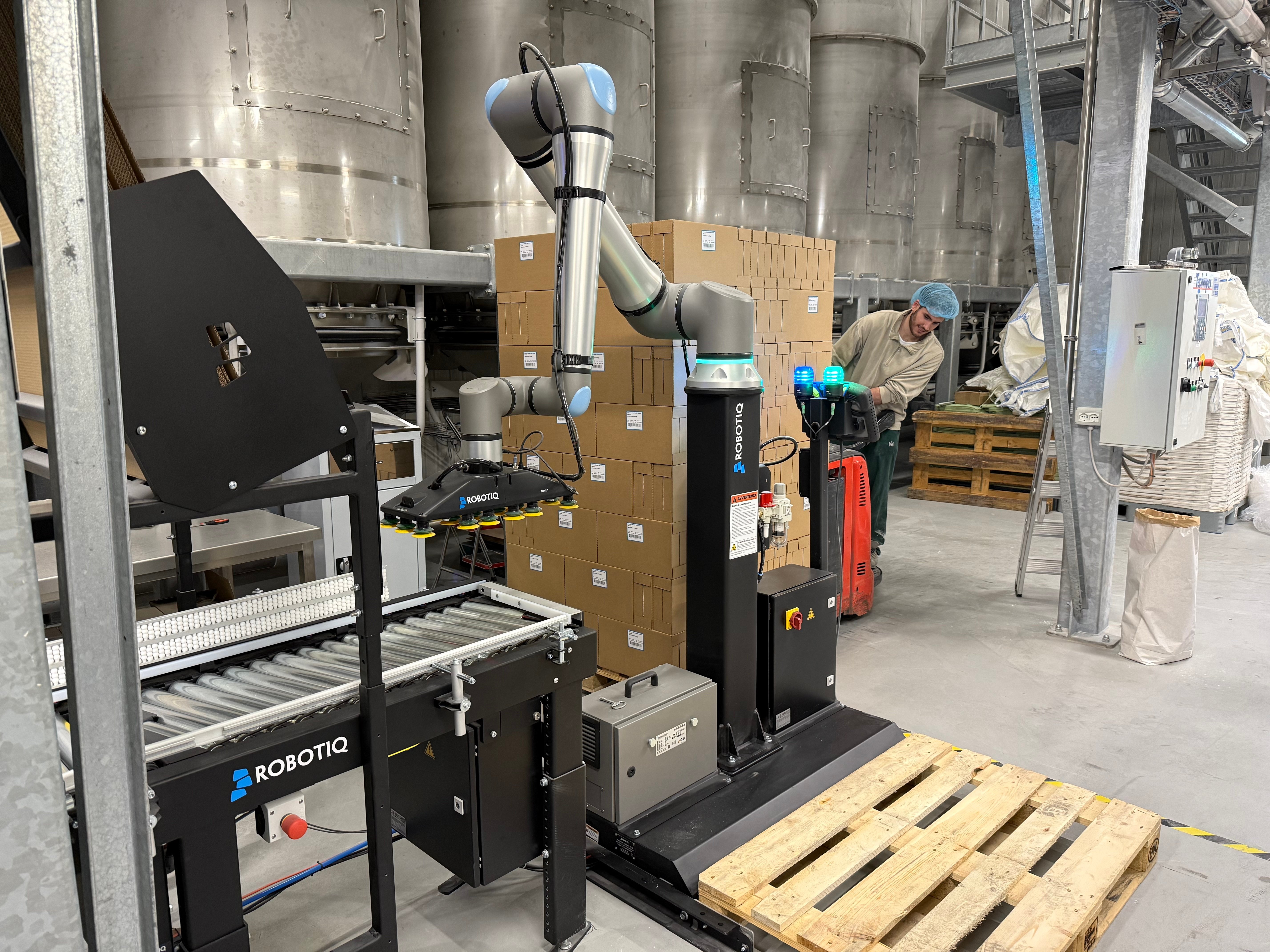
The solution: Robotiq Lean Palletizing
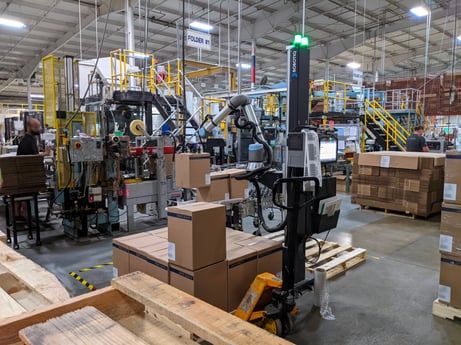
TIDI Products deployed Robotiq palletizing solutions to automate repetitive and physically demanding tasks at the end of the line.
The system provided:
- Consistent palletizing performance
- Flexibility across product lines
- Fast operator adoption due to ease of use
This allowed the team to quickly move from manual handling to a scalable, automated process.
Result 1: 30% productivity increase in the first deployment
The first palletizing cell delivered a 30% increase in productivity.
This immediate gain came from:
- Eliminating manual handling time
- Reducing operator movement between stations
- Increasing overall line speed
For manufacturers evaluating ROI, this shows how a single automation project can quickly unlock capacity.
Result 2: Repeatable gains across multiple cells
After the initial success, additional palletizing cells were deployed.
Each new cell delivered:
- 25% productivity improvements on average
This demonstrates an important principle of automation: once a process is standardized, improvements become repeatable and scalable.
Result 3: Doubling output by redesigning the workflow
Automation enabled TIDI Products to rethink its production layout.
By combining two workstations into one:
- Output per cell doubled
- Operator requirements dropped from two to one
- Uptime increased across operations
Result 4: reducing labor constraints while increasing efficiency
Labor challenges were a major driver for automation.
After deployment:
- One operator can now manage multiple processes
- Workers focus on higher-value tasks like machine operation
- Overall efficiency improves without increasing headcount
This helps manufacturers maintain output even in tight labor markets.
Result 5: improving worker safety and ergonomics
Manual palletizing required repetitive lifting of boxes weighing up to 25 lbs (11kg).
This led to:
- Strains and sprains
- Fatigue and lost workdays
With robotic palletizing:
- Injury risks were significantly reduced or eliminated
- Physical strain on workers decreased
- Jobs became less physically demanding
Improving ergonomics also supports long-term workforce retention.
Result 6: consistent output and improved product quality
Manual palletizing required training and still introduced variability.
Automation delivered:
- Consistent pallet patterns
- Reduced training time
- More reliable output
This leads to better product quality and improved customer satisfaction.
Why this matters for manufacturers considering palletizing automation
This case highlights how robotic palletizing improves:
- Production throughput
- Labor efficiency
- Workplace safety
- Operational consistency
Most importantly, the results are measurable and repeatable.
Conclusion: a fast, scalable path to higher performance
TIDI Products achieved:
- 30% productivity gains immediately
- Continued improvements with each new deployment
- Safer, more efficient operations
Their advice is simple: Automate sooner to unlock results faster.
For manufacturers dealing with labor shortages, production bottlenecks, or safety concerns, palletizing automation offers a clear path to improvement.
Find out if palletizing automation is right for you
Not sure if your application is a good fit for Lean Palletizing?
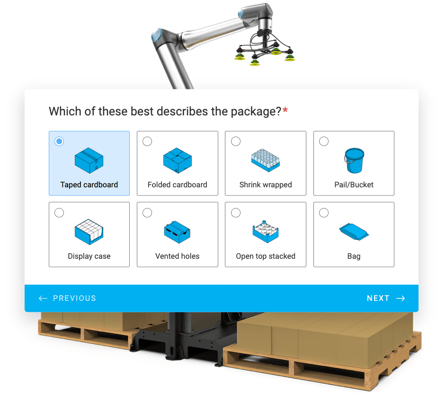
Use our Palletizing Fit Tool to quickly evaluate your palletizing needs and see if automation can deliver similar results in your operation.





Leave a comment