
Let’s set the scene: a successful, family-owned winery in Northern California. Two shifts a day. Seven days a week. Bottling line running smooth—until the very end, where cases stacked up, and progress slowed. Why? Manual palletizing.
They had modernized everything upstream, but the last step remained a human bottleneck. Every missed shift or stretched headcount meant production targets slipped.
If you’ve ever had to move people from critical roles just to keep boxes moving, you know the pain.
The leap: Compact automation without the complexity
This wasn’t about ripping and replacing a line. It was about solving a focused problem with a practical solution.
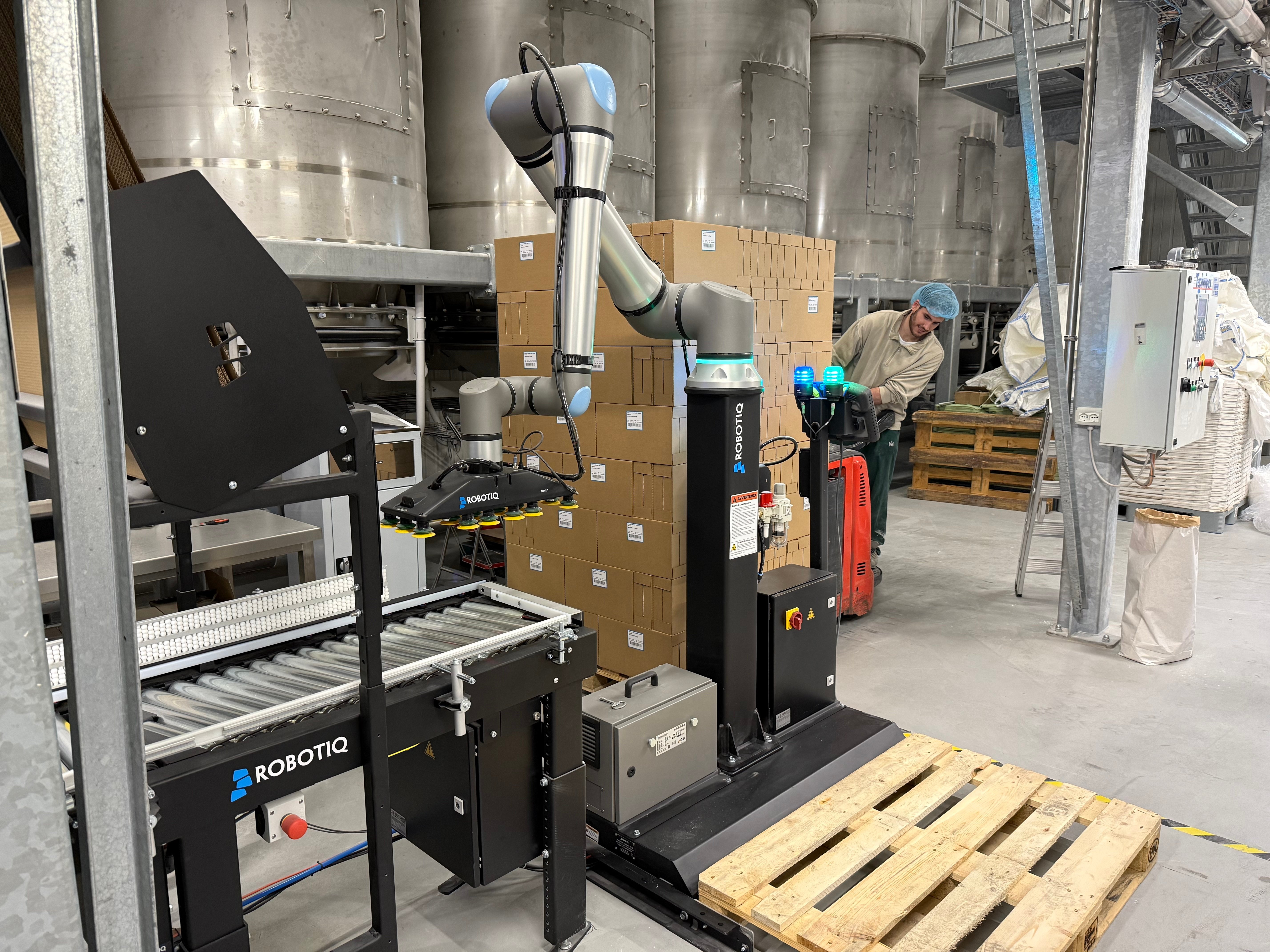
They turned to Robotiq and our installation services for a turnkey cobot palletizing setup. No drawn-out learning curves. No need to redesign the floor. Just:
- A compact, easy-to-deploy palletizer tailored to small production spaces.
- Expert installation by Robotiq’s own team, ensuring a smooth handoff and fast ROI.
- A system that allowed their staff to focus on skilled work—not stacking boxes.

The bias that holds wineries back
If you’re still managing end-of-line tasks manually, you might be experiencing status quo bias—a natural human tendency to prefer the familiar, even if it costs you every day.
It’s easy to delay action with thoughts like:
- “It’s working for now.”
- “Maybe next season.”
- “We’ll look into it when we grow more.”
But here’s the reality: every day you let a bottleneck drag production, you’re leaving revenue (and your team’s energy) on the table.
This winery didn’t wait for the perfect time. They acted when they saw the cost of inaction. And they did it without blowing up their process or needing outside integrators—just Robotiq’s team, start to finish.
Want to see what it looks like?
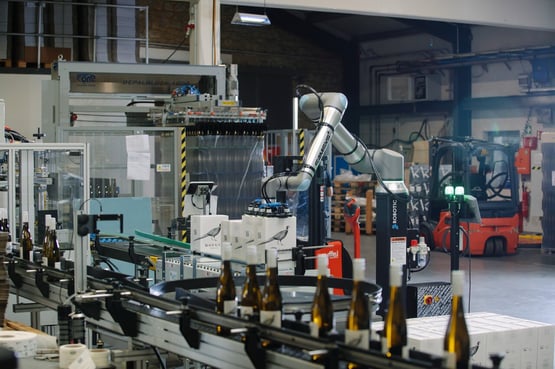
Check out how another winemaker, Raumland GmbH, solved a similar challenge. Same pressures. Same floor space constraints. Same desire to keep tradition intact while boosting output.
👉 Read the Raumland case study
👉 Watch the on-demand webinar
Because waiting rarely makes bottlenecks go away. Acting does.




Leave a comment