

Coffee production is growing worldwide.
From roasted beans to capsules and pods, manufacturers are increasing output to meet rising demand. Capsule formats such as Dolce Gusto® and other single-serve systems continue to expand in both retail and food service.
But while packaging technology has evolved quickly, many coffee plants still rely on manual palletizing at the end of the line.
That’s becoming increasingly difficult to sustain.
Operators are harder to hire. Labor costs are rising. And palletizing remains one of the most repetitive jobs on the production floor.
As a result, many coffee manufacturers are now looking at automating palletizing to stabilize operations and reduce labor pressure.
Recently, a major European coffee manufacturer faced exactly this situation.
Their goal was simple: remove manual palletizing from their capsule packaging lines without creating a complex robotics project.

The typical coffee palletizing challenge
The manufacturer was operating two coffee capsule packaging lines producing cases of pods ready for shipment.
At the end of each line, finished cases were palletized manually by operators working across three shifts.
Their setup looked like this:
- 2 packaging lines
- 3 production shifts
- 1 palletizing operator per line
- Continuous pallet building with interlayers
Each line required a dedicated operator to stack cases onto pallets throughout the shift.
Over time, the challenges became clear.
Labor costs add up quickly
With manual palletizing running across three shifts, the company was spending approximately:
€180,000 per year in labor costs just for palletizing.
And that cost continued to increase as wages rose.
Staffing was difficult
Like many food manufacturers, the company struggled to keep palletizing roles filled.
The job is physically repetitive:
- Lifting cases
- Repeating the same motion hundreds of times per hour
- Working continuously at the end of the production line
These positions often experience high turnover and absenteeism, creating additional pressure on production teams.
Palletizing can become a bottleneck
When palletizing slows down, the entire production line can be affected.
If cases accumulate at the end of the line, operators must intervene to clear the backlog, which can slow production or disrupt workflows.
For this coffee manufacturer, manual palletizing was becoming both a labor challenge and an operational risk.
Why Coffee Products Are Ideal for Cobot Palletizing
Not every product is easy to automate.
But coffee cases are often an excellent fit for collaborative robot palletizing.
Coffee manufacturers typically share several characteristics that simplify palletizing automation.
Consistent case sizes
Coffee capsules and pods are usually packed into standardized shipping cases, making them predictable for robotic handling.
Predictable pallet patterns
Most coffee plants use repeatable pallet configurations optimized for transport and warehouse storage.
Robotic palletizing systems can easily reproduce these pallet patterns.
Moderate pick rates
Many coffee packaging lines operate at moderate palletizing speeds, typically between 4 and 8 picks per minute.
These speeds are well within the capabilities of collaborative palletizing systems.
Stable products
Coffee capsules packaged in corrugated cases are typically lightweight and stable, reducing complexity for robotic gripping and stacking.
Together, these characteristics make coffee palletizing a strong candidate for cobot automation.
The coffee capsule palletizing requirements
For this manufacturer, the palletizing requirements were clear:
- Pick rate: up to 6 picks per minute
- Pallet height: up to ~2.4 meters
- Interlayer placement required
- Two independent packaging lines
These conditions made the application a strong fit for standardized cobot palletizing rather than a custom robotic project.
Instead of designing a complex robotic system, the company could deploy pre-engineered palletizing cells designed specifically for end-of-line automation.
The automation solution
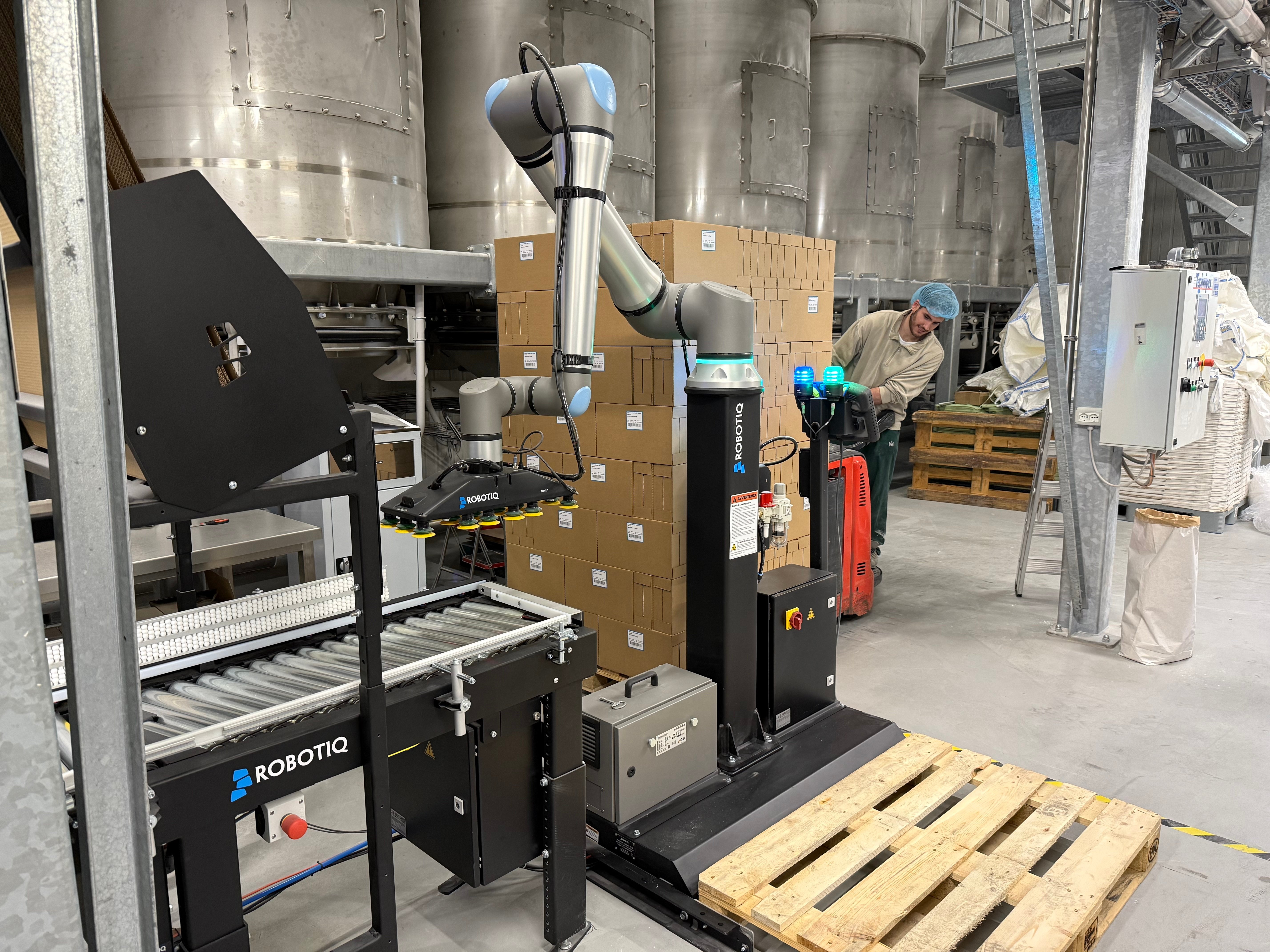
The manufacturer installed two collaborative palletizing cells, one dedicated to each packaging line.
Each cell handles the complete palletizing process:
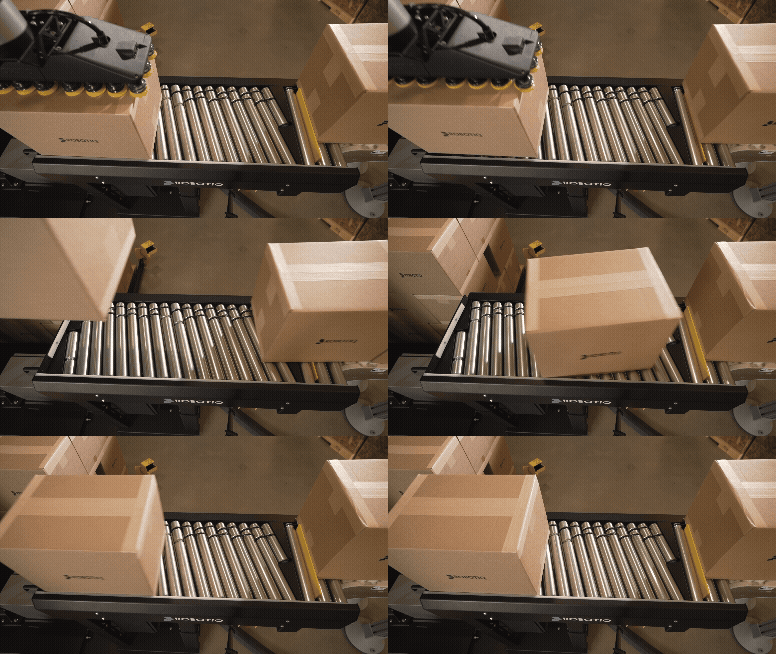
- Picking finished coffee cases from the line
- Building the pallet pattern automatically
- Placing interlayers between pallet layers
- Completing full pallets ready for shipment
Because the system is built around a collaborative robot (cobot), it can operate within typical production environments without the complexity often associated with traditional industrial robotics.
Operators can continue working nearby while the palletizing process runs automatically.
Faster deployment
Another advantage of standardized cobot palletizing systems is simpler deployment.
Traditional robotic palletizing projects often require:
- Custom engineering
- Long integration timelines
- Extensive safety infrastructure
Collaborative palletizing systems are designed specifically for palletizing, which can significantly reduce installation and commissioning time.
For many food manufacturers, this makes automation much faster and easier to implement.
The results
After automation, the manufacturer was able to remove manual palletizing from both packaging lines.
The cobot palletizing cells now handle the repetitive stacking work automatically.
This created several immediate benefits.
Operators reassigned to higher-value tasks
Instead of stacking cases all shift, operators could focus on:
- Line supervision
- Quality control
- Material handling and logistics
This allowed the plant to use its workforce more effectively.
Improved end-of-line consistency
Automated palletizing ensures pallets are built consistently and accurately, improving stability during transport and simplifying warehouse handling.
Reduced repetitive work
Palletizing involves thousands of repetitive lifting motions per shift.
Automation helps reduce repetitive strain tasks, improving ergonomics for workers.
The financial impact
The economics of the project were straightforward.
Manual palletizing across the two lines cost approximately:
€180,000 per year in labor.
By automating the palletizing process, the manufacturer eliminated most of that recurring labor cost.
The result was clear:
Payback in less than 12 months.
For many food manufacturers, palletizing automation delivers one of the fastest returns on investment in the plant, especially when labor shortages and rising wages are considered.
Is your coffee line a good fit for palletizing automation?
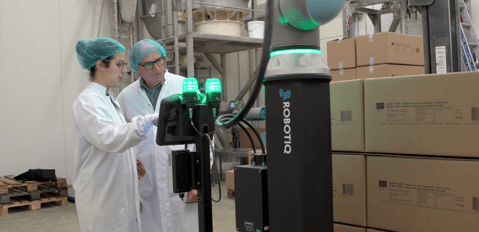
Many coffee manufacturers assume palletizing automation requires complex robotics integration.
But many applications are simpler to automate than expected.
If your production line includes:
- Moderate palletizing speeds
- Consistent case sizes
- Standard pallet patterns
…it may already be a strong candidate for cobot palletizing automation.
Curious if your application is a good fit?
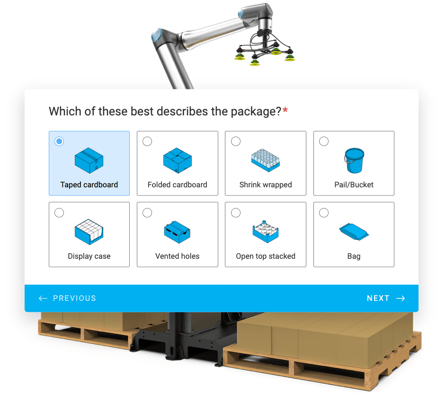
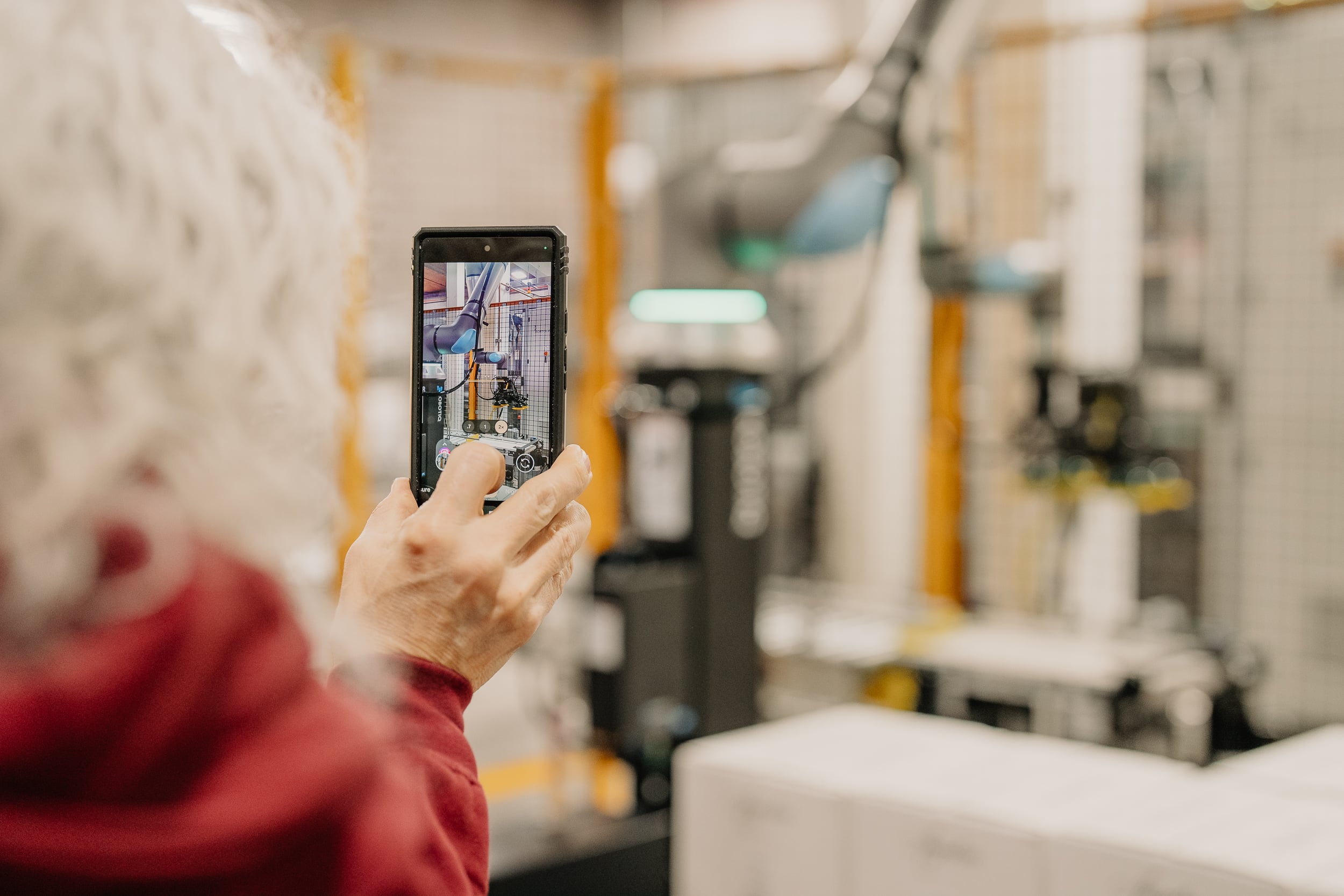
Use Robotiq's Palletizing Fit Tool to quickly assess whether cobot palletizing makes sense for your operation and what a realistic deployment could look like for your facility.




Leave a comment