
-1.jpg)
CES 2026 showed how digital AI is becoming physical — and why palletizing automation is one of the clearest examples manufacturers can deploy today.
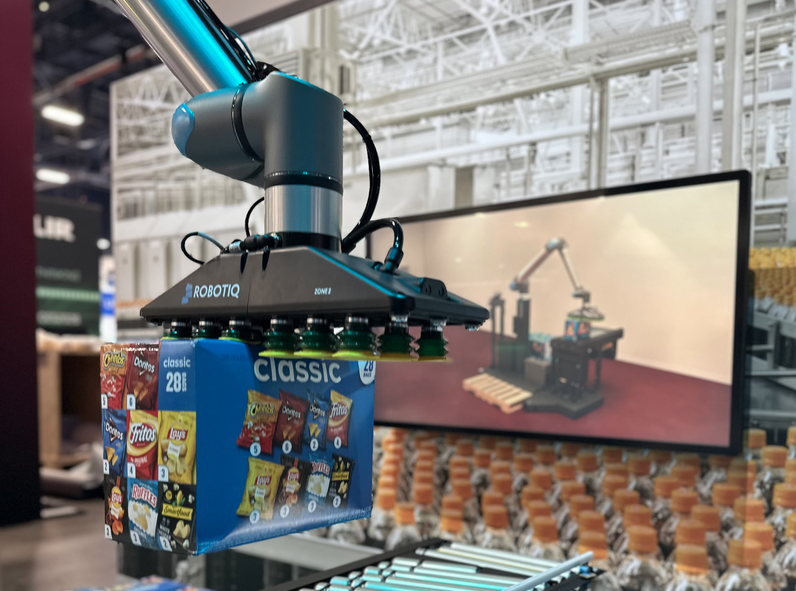
At this year’s CES, Universal Robots and Robotiq, in collaboration with Siemens, showcased a next-generation palletizing solution that demonstrated how software intelligence, robotics, and industrial ecosystems are converging on the factory floor.
Unlike many futuristic concepts on display, this solution wasn’t theoretical. It highlighted what manufacturers can implement now to address real challenges like labor shortages, end-of-line bottlenecks, and the need for fast, predictable ROI.
CES 2026 takeaway: Digital AI is becoming physical AI
AI dominated CES 2026 — but the most relevant shift for manufacturers was the move from digital-only AI to Physical AI.
Physical AI systems don’t just analyze data. They understand physical environments, plan motion, and execute tasks safely and reliably in the real world.
In manufacturing and palletizing automation, this means:
- Robots that understand physical constraints and payload limits
- Systems that adapt to production variability
- Software that bridges digital planning and shop-floor execution
The palletizing demo brought these concepts together in a way that was practical, visual, and grounded in real operations.
What the palletizing demo at CES showed
The joint Universal Robots–Robotiq–Siemens palletizing demonstration illustrated how modern palletizing automation has evolved:
Digital planning meets physical execution
Pallet patterns can be designed digitally, validated for feasibility, and deployed directly to the palletizer — reducing trial-and-error on the factory floor.
Operator-first palletizing software
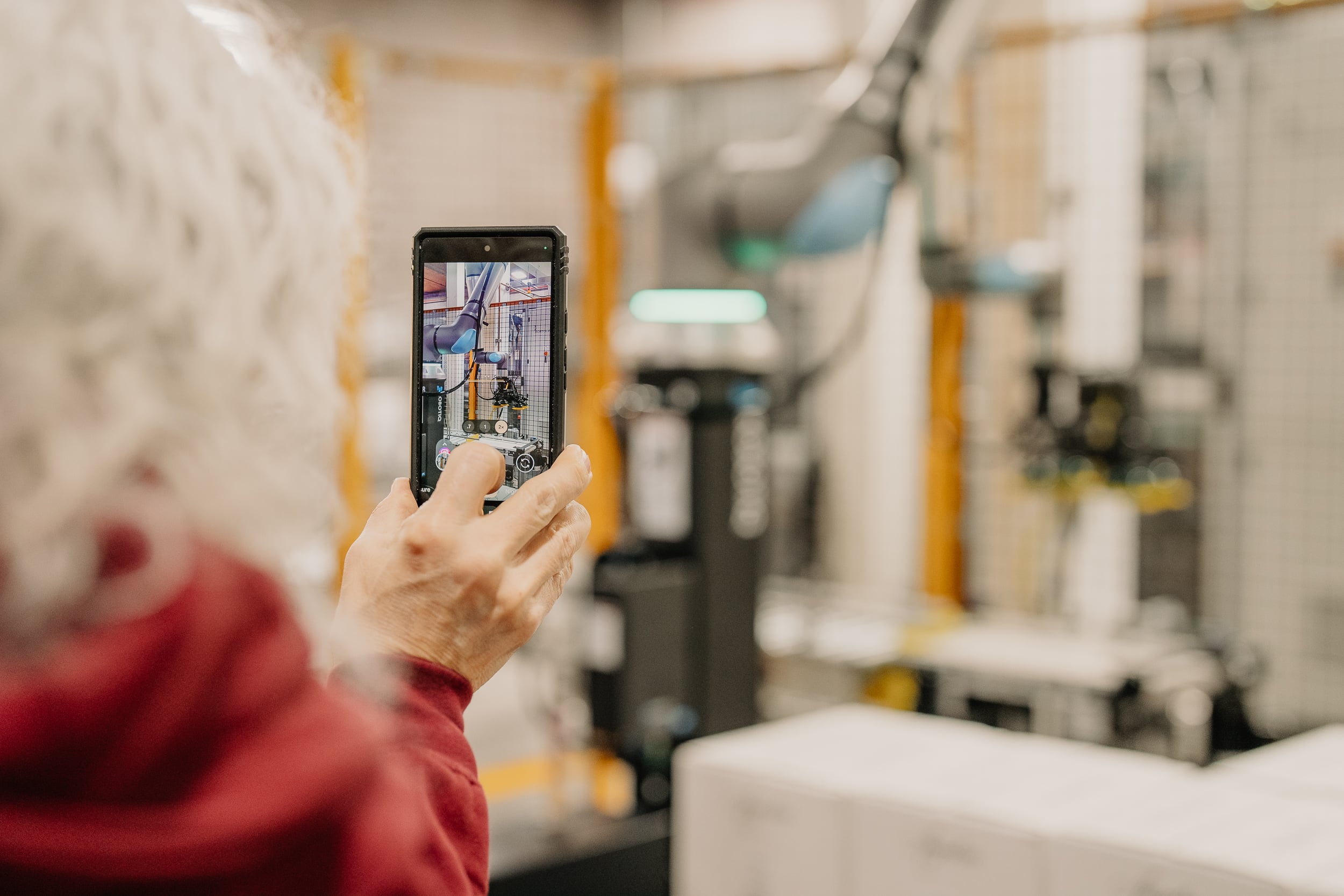
The palletizer interface was designed for operators, not robotics experts. Visual workflows, familiar interactions, and guided setup made palletizing automation accessible to everyday factory teams.
Industrial-grade ecosystem
By integrating Siemens’ industrial technologies, the solution emphasized scalability, robustness, and readiness for real production environments — not lab demos.
Together, these elements showed how palletizing automation can be powerful without being complex.
Why palletizing automation stood out at CES
Palletizing continues to be one of the most effective entry points into automation, and CES 2026 reinforced why:
- Labor shortages remain a long-term reality
- End-of-line palletizing is repetitive and physically demanding
- Manufacturers need automation with fast deployment and predictable ROI
Collaborative robot palletizing addresses these challenges by offering:
- Short installation and commissioning timelines
- Compact footprints that fit existing production lines
- Software that reduces reliance on specialized programming skills
The result is palletizing automation that supports people while improving throughput.
A clear CES 2026 theme: Simplicity drives adoption
Across demos, discussions, and customer stories, one message was consistent: simple automation scales faster.
When palletizing systems are:
- Easy to understand
- Easy to operate
- Easy to adapt as production changes
Operators adopt them. Engineers trust them. And manufacturers realize value sooner.
This focus on usability is a defining characteristic of next-generation palletizing solutions.
What CES means for manufacturers planning 2026
-2.png?width=728&height=410&name=image%20(6)-2.png)
CES 2026 wasn’t about distant predictions. It showed what is already happening on factory floors today:
- AI is becoming physical and actionable
- Automation is becoming more accessible
- Competitive advantage comes from usability, not complexity
Manufacturers evaluating palletizing automation in 2026 should focus on solutions that are proven, intuitive, and designed for real-world operations.
From CES innovation to factory deployment...today
CES is known for futuristic concepts and long-term visions. PAL Ready is different.
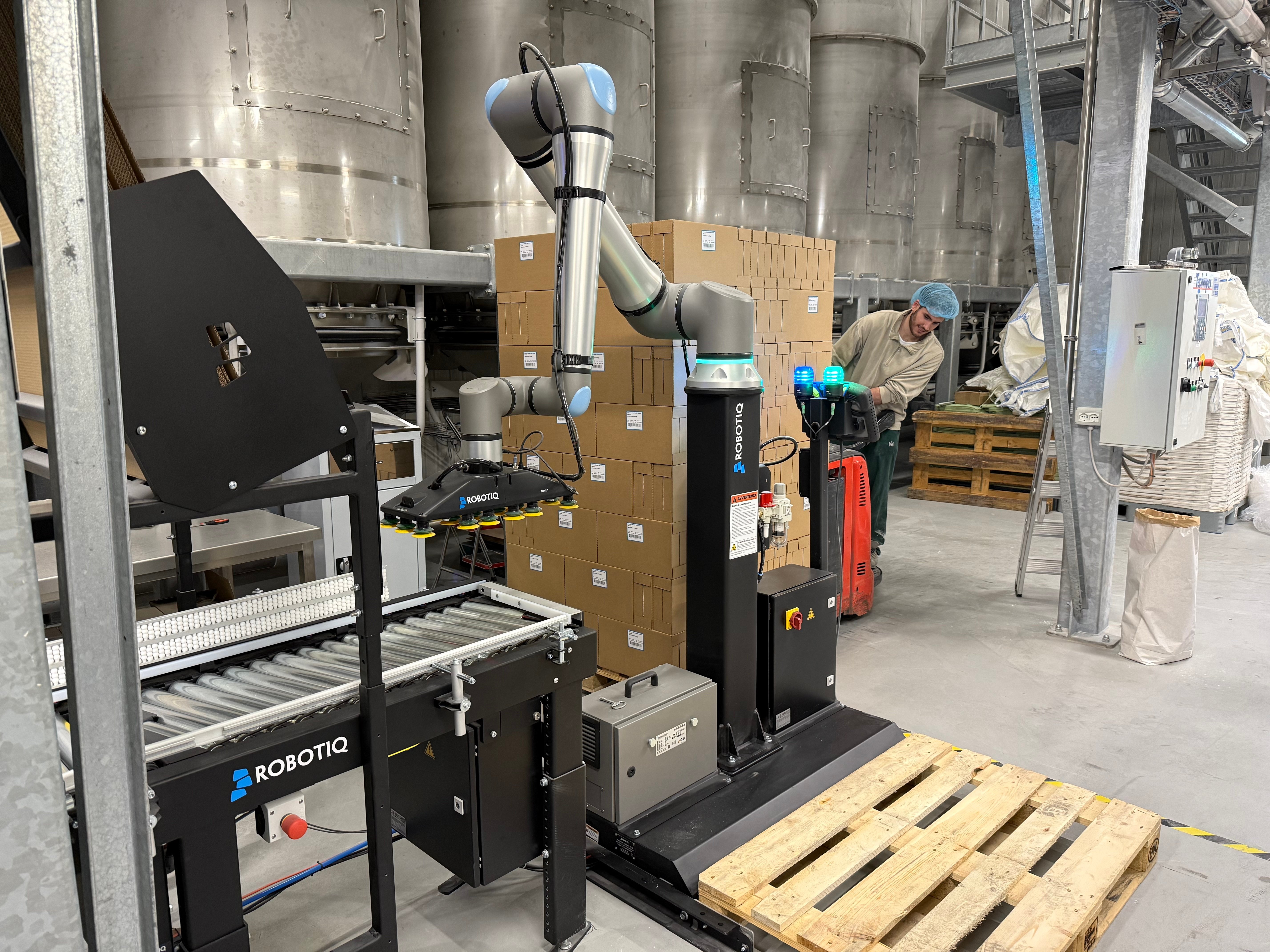
Robotiq’s PAL Ready palletizing solution is production-ready and deployable today — designed to move manufacturers from insight to impact without long engineering cycles.
Not sure if palletizing automation is the right fit for your operation?
Use our Palletizing Fit Tool to see how PAL Ready fits your factory floor and discover layout options customized to your space.
Because the smartest move after CES isn’t waiting for the future — it’s deploying automation that works now.




Leave a comment